NEWS & EVENTS
Device vs Server Geofence
2026-03-18 11:10:22
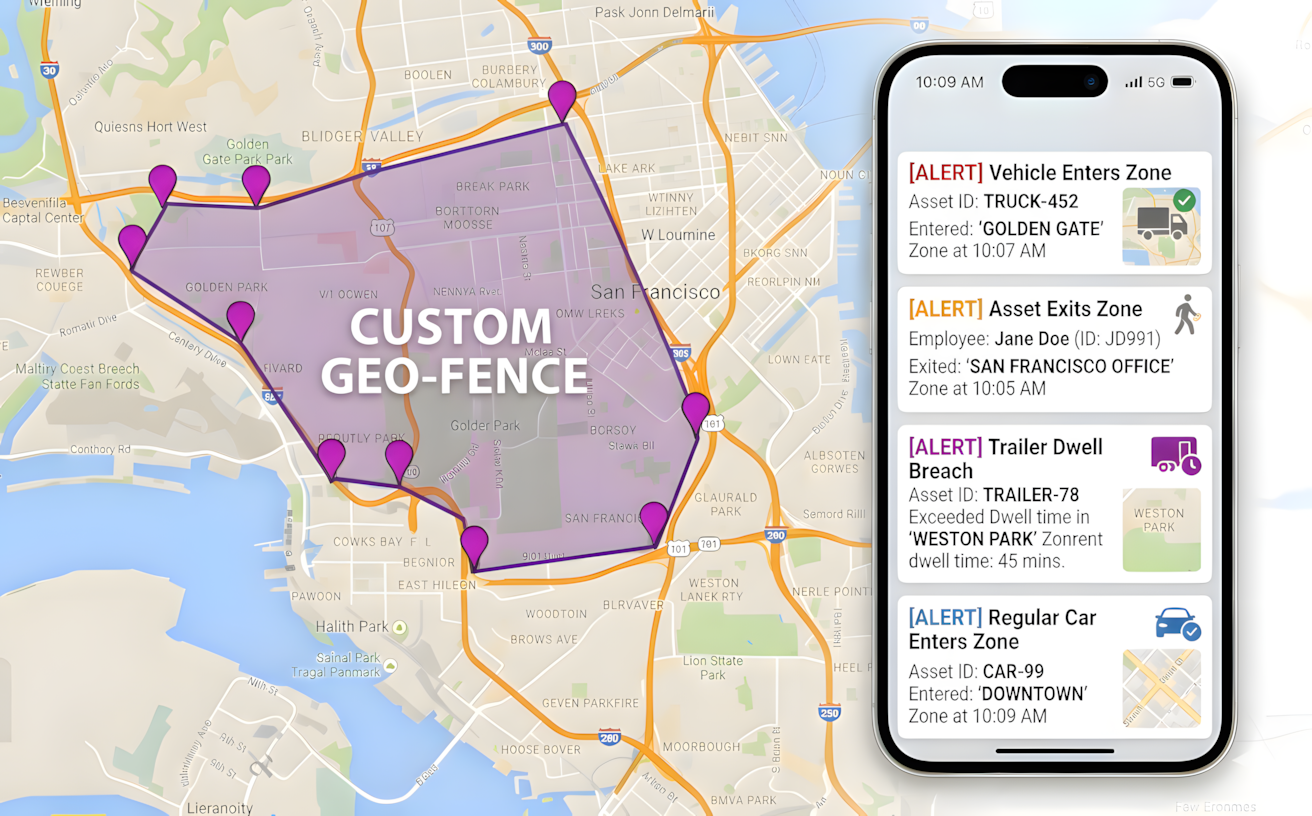
Device VS Server Geofence: Why it matters
In nowadays GPS tracking solutions, geofencing is one of the most widely used functions for asset security, fleet management, and operational monitoring. However, the way geofence events are generated and processed can vary depending on the system architecture.
Generally, electronic geofences can be implemented in two different ways in GPS tracking systems:
1. Geofence configured inside the GPS tracker device
2. Geofence configured on the server or platform
The behavior of geofence alarms, especially during network disconnection, depends largely on where the geofence logic is located.
1. Device-Side Geofence Processing
When the geofence logic is implemented inside the GPS tracker, the device itself is responsible for detecting geofence events.
Working process:
A. The tracker continuously obtains GPS positioning data.
B. The device internally calculates whether the location enters or exits the predefined geofence.
C. When the condition is triggered, the tracker generates a geofence alarm event.
D. If the cellular network is temporarily unavailable, the alarm is stored in the device memory.
E. Once the connection is restored, the stored alarm is transmitted to the server.
Advantages
Because the geofence detection occurs directly inside the device, the system can still generate alarms even when the network connection is temporarily lost. The alarm event can then be sent to the platform once connectivity is restored.
This approach is widely used in security-critical applications such as anti-theft protection or vehicle security monitoring.
2. Server-Side Geofence Processing
In another architecture, geofence calculations are handled by the server platform.
Working process:
A. The GPS tracker only uploads position data.
B. The platform receives the location information.
C. The server performs geofence calculations and determines whether the device has entered or exited the defined area.
Limitation
If the device loses network connectivity and cannot upload position data during that period, the server has no information to process. As a result, it cannot determine whether the geofence was crossed while the device was offline.
Example scenario
Device exits geofence → network disconnected → no location data uploaded
In this case, the platform will only receive the latest location after the connection is restored and may not know exactly when the geofence event occurred.
3. Possible Mitigation Methods
Although real-time alarm re-sending is not possible in a pure server-side architecture, several methods can partially address the issue.
Method 1: Device stores historical GPS positions
Many GPS trackers are capable of storing historical location records, typically between 3000 and 10,000 points. Once the network connection is restored, the device uploads the stored data to the server.
The platform can then reconstruct the trajectory and analyze whether the device crossed a geofence.
However, this method provides retrospective detection rather than real-time alerts.
Method 2: Server trajectory re-calculation
After receiving the historical data, the server can run the geofence calculation again and determine when the device entered or exited the defined area.
Advantages
The platform can still generate geofence events based on historical location data.
Limitations
The alarm will be generated with a delay, and the time accuracy depends on the GPS reporting interval, for example every 30 seconds or every 1 minute.
4. Common Industry Practice
Many professional GPS tracking systems adopt a hybrid architecture that combines both approaches.
Device-side geofence is typically used for critical alerts such as
• vehicle theft prevention
• leaving depot or parking area
• high priority security alerts
Server-side geofence is more suitable for operational management purposes such as
• fleet zone management
• area statistics and analysis
• complex polygon geofence configuration
Conclusion
Device-side geofence enables offline detection and alarm re-sending once connectivity is restored.
Server-side geofence relies on uploaded location data and may only detect events retrospectively if historical records are available.
In practical deployments, combining both methods often provides the best balance between real-time security alerts and flexible platform management.